
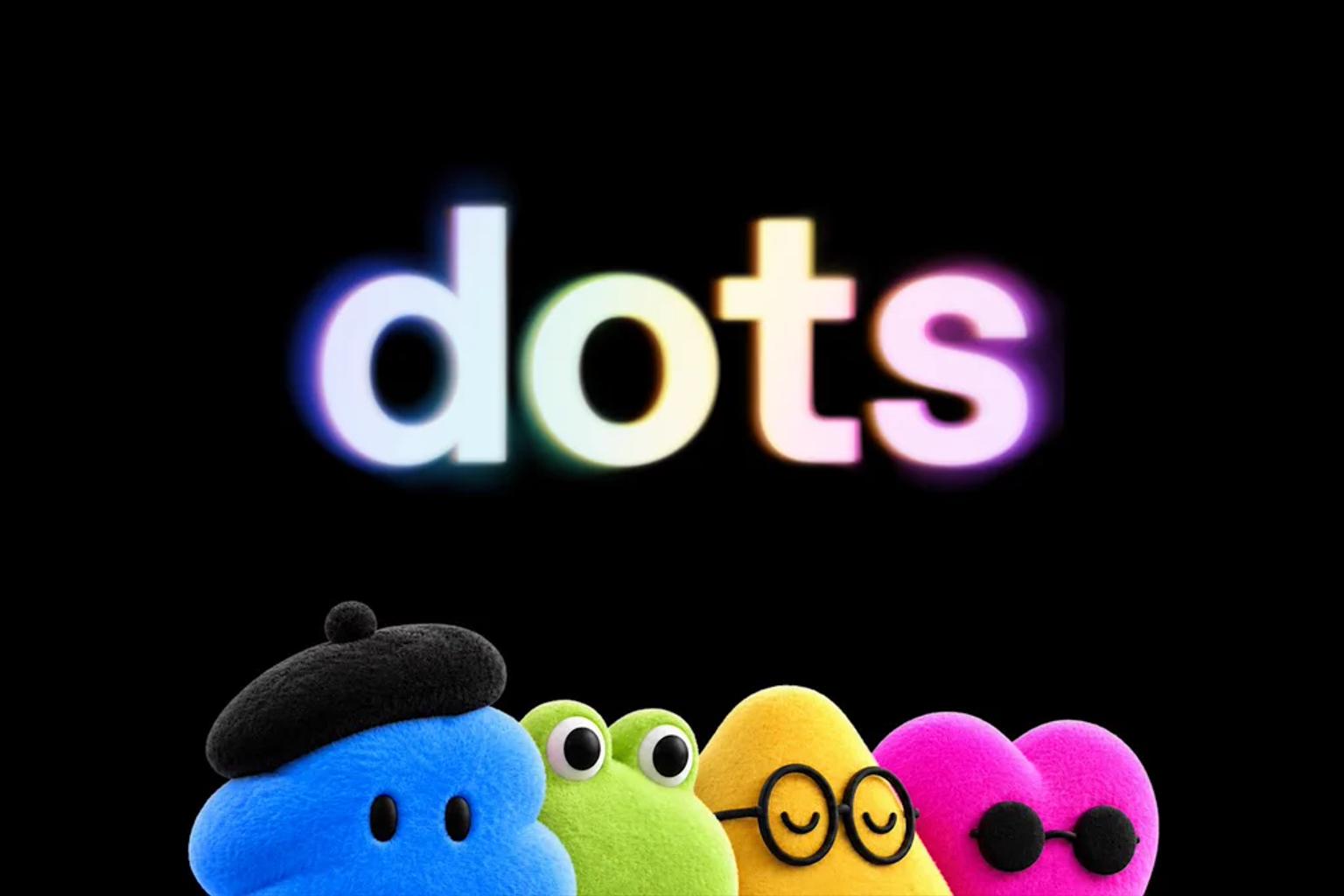
OpenAI launches Dots, bringing ongoing AI tasks to ChatGPT
OpenAI announced Dots on September 29, introducing AI agents designed to keep working between conversations. Powered by GPT-6 Astra, each dot has a cloud computer and can use connected apps to pursue tasks, according to the company. [1]
The pitch is ongoing assistance: users supply a goal, while the agent works through steps and returns with results or questions. Whether that reduces supervision in practice remains an open question for users, rather than a result established by the announcement.
Who can use it
OpenAI’s setup guide says access is rolling out gradually and may take several days to reach an account. Pro availability initially excludes the European Economic Area, Switzerland and the UK. Business Premium availability covers supported ChatGPT regions; Enterprise access requires an administrator to enable the beta. [2]
Initial setup takes place in the desktop app or a desktop browser. The guide says mobile conversations become available after setup when mobile access reaches the account; mobile web is not supported. [2]
There is an important distinction in the launch announcement’s usage rules: conversations with a dot do not count toward ChatGPT usage limits, but tasks it starts or manages in Codex or ChatGPT Work still count toward those services’ usual limits. A dot is therefore not a route around an existing coding allowance. [1]
Background research has narrower permissions
OpenAI distinguishes proactive research from actions performed for a task. Its safety documentation says proactive research uses restricted, read-only tools. Those tools cannot send messages, modify connected-app content or control a browser or computer. [3]
That distinction matters when deciding what “always on” means. Reading for a useful update and acting on that update are separate operations, with different consequences for the account owner.
The company describes additional safeguards, including checks on planned actions and monitoring that can pause work. It also acknowledges that dots can make mistakes. These are OpenAI’s descriptions of its protections, not an independent security assessment. [3]
Disconnecting an app does not erase its context
The privacy FAQ identifies a limitation worth checking before connecting accounts: disconnecting a service stops new access but does not erase information already incorporated into a dot’s context. Users currently cannot inspect or edit individual dot memories; deleting the dot removes its own context. Files and conversations stored elsewhere, and separately managed ChatGPT memories, are not automatically removed with it. [4]
For readers considering a trial, a useful first question is which bounded task deserves that access—and how they will check the result. The launch establishes availability and intended capabilities. It does not establish reliable performance across every workflow.
Sources & context
- Introducing dotsOpenAI, September 29, 2026
Launch announcement and usage distinction.
- Getting started with your dotOpenAI Help Center, consulted September 29, 2026
Plan, regional and device availability.
- How we build safety, security, and privacy into dotsOpenAI, September 29, 2026
Proactive-research restrictions and described safeguards.
- Dots privacy, security, and safety FAQsOpenAI Help Center, consulted September 29, 2026
Context retention and deletion limits.
AI assisted with preparing and checking this article. The responsible editor accepted this version for publication following an assisted review of facts, sources and attribution.
Related reading