
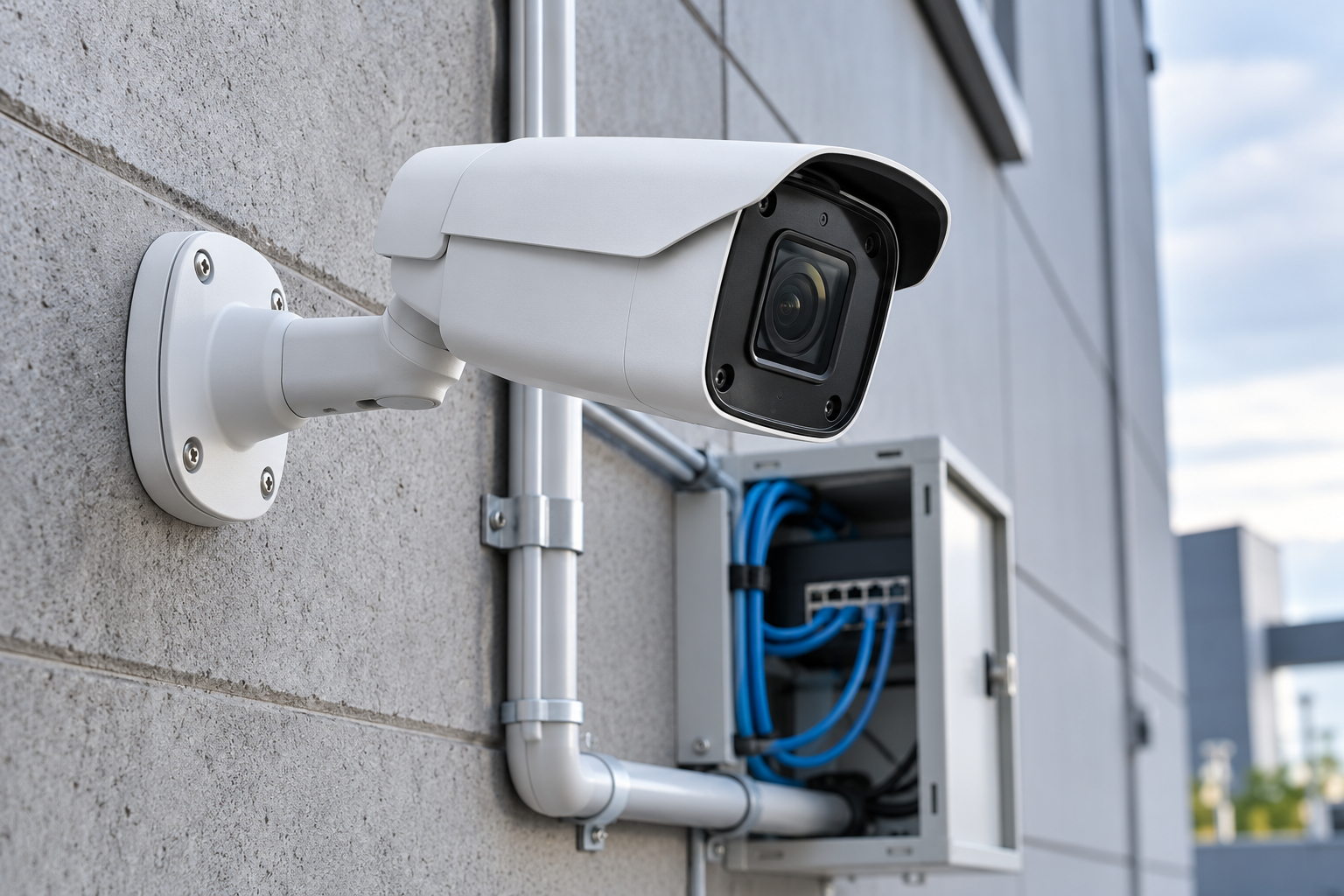
What CISA announced
CISA initially released its Anjvision YSSD-RTMP-H5 advisory on September 29, 2026. The agency says successful exploitation of the reported vulnerabilities could expose sensitive information, give attackers access to accounts, permit operating system commands or allow complete device takeover. For organizations using the equipment, the potential consequences therefore extend across information access and control of the device.
The advisory identifies firmware 3.3.2.4_build_2024-12-26 as affected and describes deployment as worldwide, with commercial facilities listed as the relevant critical infrastructure sector. That gives readers a specific firmware identifier against which to assess relevance. The documented scope is this listed release; the affected-product entry does not establish the status of other firmware versions.
Access conditions shape the risk
CISA describes several ONVIF management endpoints that fail to require authentication. Separately, it says a hidden debugging interface can be enabled through an authenticated request. These are materially different starting conditions: the first finding concerns a missing authentication requirement, while the second describes a pathway requiring an authenticated request. Treating every finding as equally accessible would obscure that distinction.
The update mechanism presents another concern. According to CISA, local and cloud firmware updates depend on basic hashing without cryptographic verification. The agency says an attacker able to reach the update routine could supply an untrusted image that the device accepts. The implication is a weakness in firmware acceptance, with access to the update routine an explicit condition of the described attack.
Defensive measures have operational conditions
CISA recommends reducing network exposure, preventing internet access to control system devices, placing networks and remote equipment behind firewalls, and separating them from business networks. Where remote access is necessary, it recommends methods such as VPNs. That recommendation carries a qualification: CISA says VPNs can themselves contain vulnerabilities, need current updates and depend on the security of connected devices.
CISA also calls for impact analysis and risk assessment before defensive measures are deployed. For operators, that makes assessment of the proposed protections part of the response. On exploitation, the agency reports that it had received no reports of known public attacks specifically targeting these vulnerabilities at the time of the advisory. That statement concerns CISA's reporting visibility and does not establish that exploitation has never occurred.
Sources & context
- Anjvision YSSD-RTMP-H5 | CISACISA
Single-source report; claims attributed to the source, not independently verified. Source feed date (published): 2026-09-29T12:00:00.000Z. Study date: not established. Consulted: 2026-10-01T15:29:12.519Z.
AI assisted with preparing and checking this article. The responsible editor accepted this version for publication following an assisted review of facts, sources and attribution.
Related reading

Eufy Omni C20 and Omni X10 Pro flaws could allow system commands, CISA says

Meari cloud flaws could expose device controls and data, CISA says